
Diversifying Savings Accounts and Certificates: A Smart Growth Plan for Parents
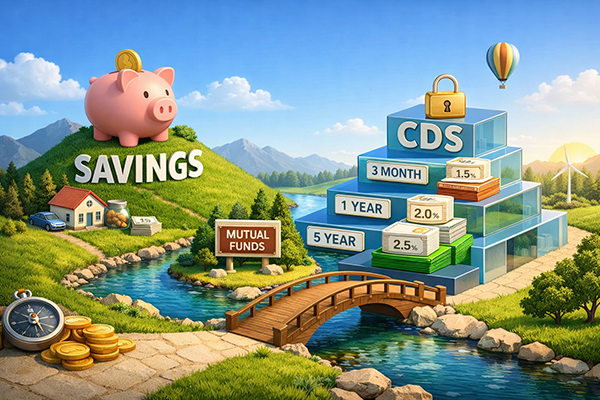
When you’re raising children, financial planning isn’t just about numbers — it’s about stability, opportunity, and peace of mind. Parents carry multiple financial responsibilities at once: monthly expenses, emergency savings, future education costs, family vacations, home upgrades, and long-term wealth building.
One of the most overlooked but powerful strategies for families is diversifying savings accounts and certificates to create a well-rounded growth plan. Just as you wouldn’t invest everything in a single stock, you shouldn’t rely on just one savings vehicle to meet every goal.
A thoughtful mix of liquid savings and higher-yield certificates can help parents balance flexibility, growth, and security — all while teaching children smart financial habits along the way.
Why Diversification Matters for Families
Many families keep most of their money in a single checking or basic savings account. While simple, this approach may limit growth potential and blur the purpose of your savings.
Diversification allows you to:
-
Separate short-term and long-term goals
-
Earn higher dividends where possible
-
Reduce the temptation to dip into long-term savings
-
Match savings tools with specific family priorities
-
Create a structured, goal-driven plan
When each account has a purpose, saving becomes more intentional — and more effective.
Step 1: Build a Strong Liquid Foundation
Before focusing on growth, parents need stability.
1️⃣ Emergency Savings Account
Every family should have an emergency fund covering 3–6 months of essential expenses. This account should be:
-
Easily accessible
-
Separate from daily spending
-
Earning competitive dividends
Emergencies aren’t predictable — job changes, medical expenses, car repairs, or unexpected home costs can arise at any time. Having a dedicated emergency fund prevents reliance on credit cards or loans.
This account is about security, not maximum yield.
2️⃣ Goal-Based Savings Accounts
Instead of one large savings account, consider opening multiple labeled savings accounts for:
-
Family vacation
-
Holiday spending
-
Back-to-school expenses
-
Summer camps
-
Home projects
Many financial institutions allow you to nickname accounts. When parents can visually see “Disney Trip Fund” or “Summer Camp 2027,” saving becomes motivating and tangible.
For kids, this is also a powerful teaching moment. Show them how money moves toward specific goals.
Step 2: Use Certificates to Accelerate Growth
Once short-term liquidity is established, certificates (sometimes called share certificates or CDs) can play an important role.
Certificates typically offer:
-
Higher fixed dividend rates
-
Guaranteed returns for a set term
-
Protection from market volatility
-
Disciplined savings structure
For parents, certificates are ideal for planned future expenses.
Strategic Uses for Certificates in a Family Plan
🎓 Education Savings Milestones
If you know tuition payments are coming in 1–5 years, stagger certificates with maturity dates aligned to those needs.
Example:
-
12-month certificate for next year’s tuition
-
24-month certificate for the following year
-
36-month certificate for longer-term goals
This is called laddering, and it allows families to balance growth and access.
🚗 Planned Large Purchases
Saving for:
-
A teen’s first car
-
A major appliance replacement
-
A family move
Certificates prevent premature spending while earning higher dividends than a standard savings account.
🎁 Long-Term Family Goals
Perhaps your goal is a family sabbatical, home remodel, or dream vacation in five years. Certificates allow you to set money aside with intention and protection from impulse withdrawals.
Step 3: Consider a Certificate Ladder Strategy
A ladder strategy spreads money across multiple certificates with different maturity dates.
Instead of putting $20,000 into one 5-year certificate, you might divide it into:
-
$5,000 in a 12-month certificate
-
$5,000 in a 24-month certificate
-
$5,000 in a 36-month certificate
-
$5,000 in a 48-month certificate
As each certificate matures, you can:
-
Reinvest at current rates
-
Use funds for planned expenses
-
Adjust based on family needs
This approach reduces interest rate risk and maintains flexibility.
For parents, laddering creates rhythm and discipline in savings growth.
Step 4: Don’t Forget Youth Savings Accounts
Diversification isn’t only for parents.
Opening savings accounts for children:
-
Encourages financial literacy
-
Builds early saving habits
-
Allows grandparents to contribute
-
Teaches goal setting
Some families even match their child’s savings contributions — reinforcing positive behavior.
When children see interest earned in real time, saving becomes exciting rather than abstract.
Step 5: Balance Liquidity and Yield
A common mistake is locking too much money into long-term certificates without maintaining adequate liquidity.
Ask yourself:
-
Can I cover emergencies without early withdrawal penalties?
-
Are upcoming expenses funded in accessible accounts?
-
Am I comfortable with funds being locked for the full term?
Diversification works best when you maintain:
-
Immediate access funds (checking + emergency savings)
-
Mid-term funds (high-yield savings)
-
Longer-term funds (certificates)
Each layer serves a different purpose.
Step 6: Revisit and Adjust Annually
Family life changes quickly.
New baby?
New school expenses?
Teen driver?
Job promotion?
Review your savings structure at least once per year. Adjust certificate amounts, ladder timing, and goal allocations as needed.
Growth planning is not “set it and forget it.” It evolves with your family.
Step 7: Model Financial Confidence for Your Children
Perhaps the most powerful reason to diversify savings is the example it sets.
When kids observe parents:
-
Naming goals
-
Tracking growth
-
Planning ahead
-
Avoiding panic during emergencies
They internalize financial stability as normal.
You’re not just growing money — you’re building a culture of financial confidence.
A Simple Example of a Well-Rounded Family Plan
Here’s what a diversified savings structure might look like:
-
Emergency Fund: 6 months expenses in high-yield savings
-
Vacation Fund: Separate savings account with automatic transfers
-
Holiday Fund: Dedicated savings bucket
-
Education Certificates: Laddered 1–3 years
-
Long-Term Certificate: 5-year family goal
-
Youth Savings Accounts: For each child
This structure separates purpose, maximizes growth potential, and reduces emotional financial decisions.
Final Thoughts: Stability + Growth = Peace of Mind
For parents, financial planning is deeply emotional. It’s about protecting your children, creating opportunity, and reducing stress.
Diversifying savings accounts and certificates provides:
-
Protection during uncertainty
-
Structured long-term growth
-
Clarity around goals
-
Higher potential dividends
-
Teachable moments for kids
It transforms saving from a vague habit into a deliberate family strategy.
The most financially confident families aren’t necessarily those who earn the most — they’re the ones who organize their money with intention.
And when your savings plan reflects your family’s goals, values, and future dreams, growth becomes more than numbers on a screen.
It becomes freedom.
Tools and Calculators Disclosure:
The information, content, tools, links, articles, calculators, and resources provided on this website are intended for educational and informational purposes only. They are designed to help individuals and families make informed financial decisions but should not be considered financial, legal, tax, investment, or professional advice.
While we strive to provide accurate and up-to-date information, we do not guarantee the completeness, accuracy, reliability, suitability, or availability of any content or third-party materials referenced on this site
Any links to third-party websites, products, services, or applications are provided as a convenience for educational purposes. These external resources are not owned, operated, controlled, endorsed, or guaranteed by the credit union unless explicitly stated as an official product or service offering. The credit union is not responsible for the content, security, availability, or privacy practices of external websites or third-party providers.